
With the winter season soon approaching it is time to start thinking about the best ways to store all the hay that you have either worked extremely hard harvesting over the summer or purchased in preparation for the winter. Western Packaging can help with hay sleeves, but here are some tips to help you store your hay through the winter.
Key Takeaways
- The most important thing for winter hay storage is to keep it dry. Storing hay indoors or under cover helps keep its quality and reduces waste.
- Bales that are packed tightly and shaped well keep out moisture better than loose bales.
- Raising hay off the ground allows air to circulate around it and prevents ground moisture from causing damage.
- Stacking and spacing hay properly helps it dry out better.
- Even small changes to how you store hay can protect your investment and keep feed quality high through the winter.
1. Store Hay Indoors
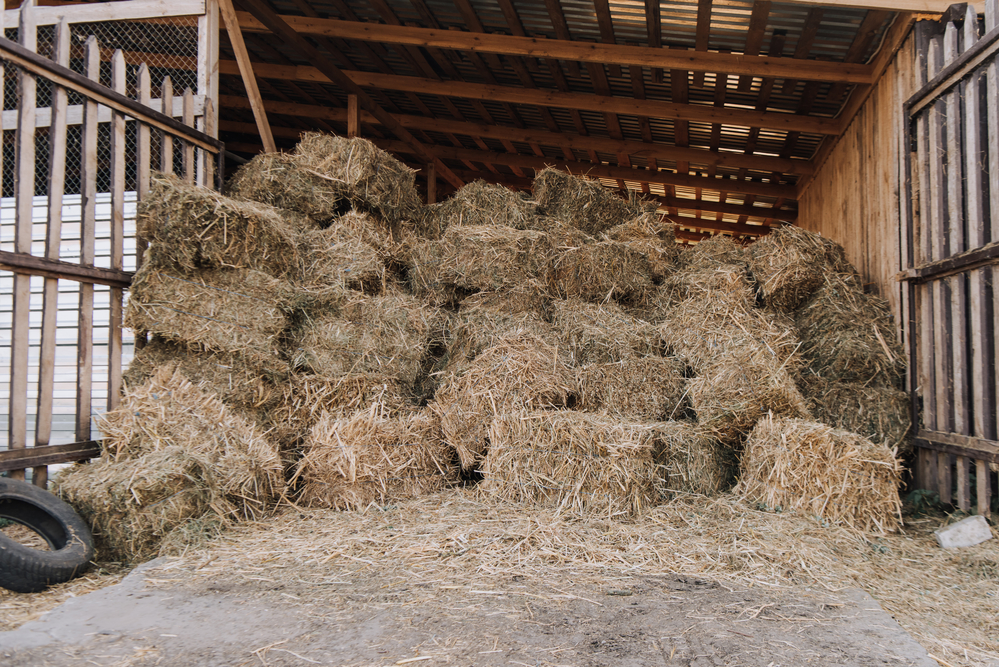
Storing your hay in an indoor structure is the best option. The structure does not need to be 4 walls and a roof; it can be just a roof. Storing indoors is optimal because the color and quality will be preserved. You can also reduce dry matter loss.
2. Maintain Bale Density
Ensuring the outer layer of your hay bales is properly tightened is one of the main ways to ensure proper storage. If the bales are too loose, moisture and other elements can penetrate, causing product loss.
3. Storage Site Selection
Selecting the proper site to keep your bales is very important. You want to choose a location with good airflow and no shade from trees, especially if you are storing your hay outdoors. You want to make sure that the drying conditions are at their best to minimize the loss of any hay.
Low-lying areas should also be avoided. Water tends to collect in these spots, increasing the risk of mold and spoilage. A slight slope can improve drainage and help keep your bales in better condition.
4. Elevate Your Hay Bales
Elevating your bales of hay will prevent anywhere from 5-20% of any loss of your dry matter. You can elevate using these methods:
- Pallets (new or old)
- Used Tires
- Fence Posts
- Racks
- 4 – to 6- inch layer of rocks
Using any of these methods will work to preserve your hay during the winter months. Keeping it off the ground directly helps allow for air circulation and faster drying.
5. Proper Stacking Of Round And Square Bales
When it comes to stacking your hay, there are specific ways to do so to ensure proper storage. For round bales, it is best to stack them end-to-end, leaving about 3-4 feet of space between rows. For square bales, it is best to stack them in a square stack pattern alternating so they do not fall over.
Tighter, well-planned stacks also make handling easier during the winter. When snow or ice hits, having organized rows can save time and reduce the risk of damage when moving bales.
6. Cover, Cover, Cover
Using tarps, plastic wrap, sleeves, or canvases will help prevent your bales, especially round bales, from weathering. If your hay is left to weather, it reduces your livestock’s ability to digest it.
Noticing a pattern? The key to storing your hay through the winter is to keep it dry. Keeping it dry is the best way to ensure that your time, work, money, and product are not lost.
We see this every season. Operations that focus on moisture control tend to have better feed quality and less waste by the end of winter. It does not take major changes, just consistent attention to the basics.
Additional Tips for Winter Hay Storage
Even small things can make a difference over the winter. It helps to check your hay once in a while for moisture, mold, or shifting stacks so you can fix issues early. Try to use older hay first so it doesn’t sit too long. Staying on top of it like this goes a long way toward keeping your supply in good shape and reducing waste.
We Want to Help
If you are in need of winter storage for your hay bales, our team at Western Packaging is eagerly waiting to help you. Contact us today, and we look forward to hearing from you.
Related Resources
Are you looking to further improve your hay storage and packaging? These resources from our site can help:
- Bulk bag solutions for agricultural storage
https://westernpackaging.com/ - Benefits of polypropylene bags for durability and protection
https://westernpackaging.com/what-are-the-benefits-of-polypropylene-bulk-bags/ - Shipping and storage solutions for agricultural products
https://westernpackaging.com/shipping-sacks/



Sorry, the comment form is closed at this time.